
What to expect at Gibson Orthotics
|
Many patients and families arrive at their first appointment unsure of what an orthotist actually does, or what a consultation involves. This page walks you through every stage of the Gibson Orthotics process — from your first contact to long-term follow-up — so you know exactly what to expect. No referral is required to book. You can self-refer directly or arrive following a recommendation from your physiotherapist, paediatrician, neurologist, or GP. Either way, the process is the same. |
Your Patient journey,
1
Initial consultation and clinical assessment
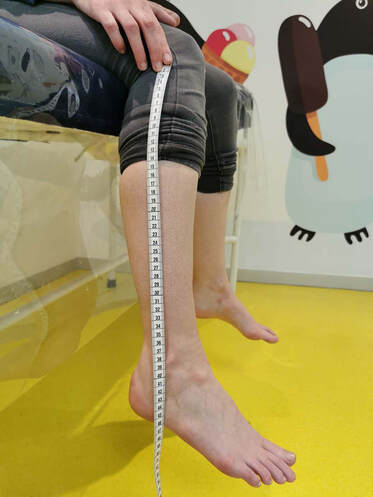
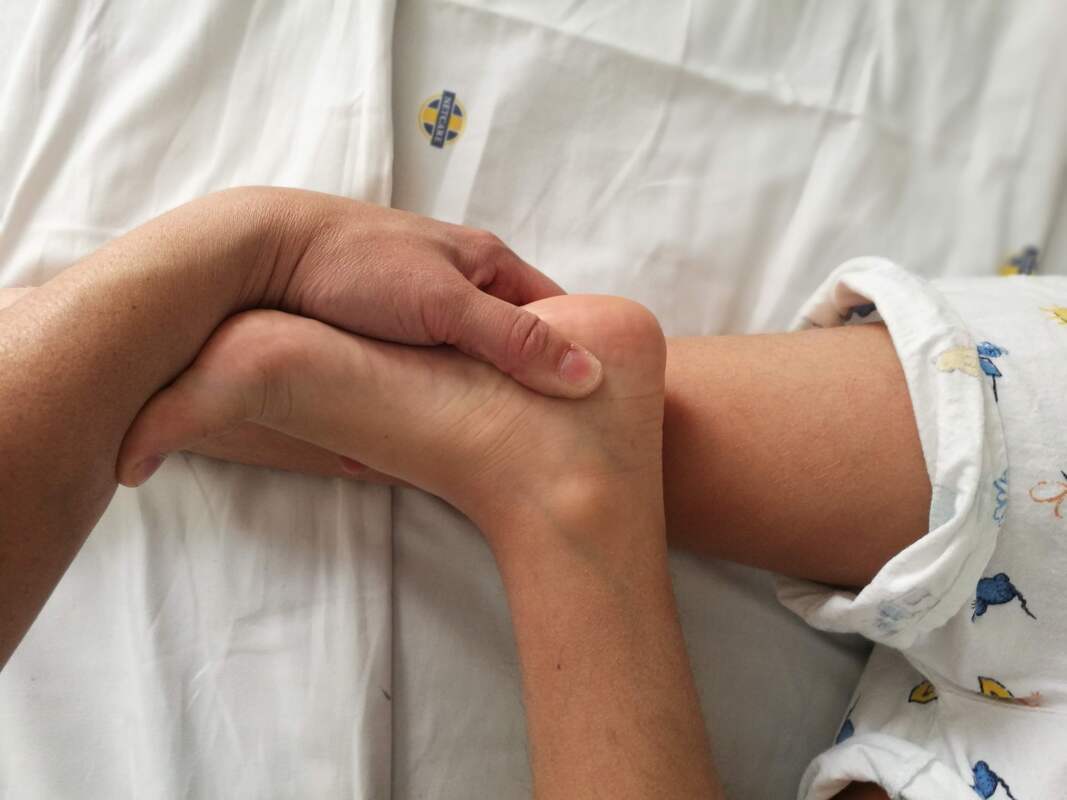
Your first appointment is a full clinical evaluation. We take a detailed history — including your diagnosis, prior treatment, current therapy programme, and goals — and conduct a physical assessment relevant to your presentation. This includes range of movement testing, muscle strength grading, spasticity or tone assessment where applicable, postural analysis, and for gait-related conditions, a full clinical gait analysis. We review any existing imaging (X-rays, MRI, previous orthotic reports) and will request further investigation if needed before proceeding to prescription.
2
Orthotic prescription and treatment plan
Based on the assessment findings, we develop an individualised orthotic prescription. We explain the rationale for the recommended device, discuss alternatives, outline realistic treatment goals, and give you a complete written quote for the full treatment course before any fabrication begins. For patients with complex presentations, we may recommend an MDT consultation with your referring clinician before finalising the prescription.
3
3D scanning and custom fabrication
Where custom fabrication is required, we use high-definition 3D scanning to capture the exact shape of the relevant body segment. This replaces traditional plaster casting — it is faster, more precise, and eliminates the discomfort and mess of the cast process. The digital scan is used to design and manufacture your orthosis to millimetre accuracy. Fabrication typically takes 5–10 working days.
4
Fitting and fine-tuning
At the fitting appointment, we verify that the orthosis achieves the prescribed biomechanical goals, correct alignment, appropriate pressure distribution, and optimal function in the target footwear or clothing. Fitting can take one to two hours for complex cases. We conduct dynamic assessment where applicable, observing the patient walking or moving with the device in place. Fine-tuning adjustments are made at the fitting appointment; a second fitting may be scheduled for highly complex cases.
5
Patient and caregiver education
Before you leave, we ensure you and any caregivers involved in daily management, know how to don and doff the device correctly, how to inspect skin integrity, what a normal wearing-in period looks like, and when to contact us.
Written wearing instructions are provided.
For children, we include guidance on how to integrate the device with existing therapy programmes.
6
Follow-up and review
Gibson Orthotics offers a free 3-month review for all adult patients.
For pediatric patients, follow-up frequency is determined by growth rate, device type, and clinical progress.
For scoliosis patients, we establish a monitoring schedule aligned with bracing guidelines.
For cranial helmet patients, follow-up is every 4–6 weeks throughout the treatment course.
We maintain clinical records and provide written outcome reports on request for your referring clinician
Initial consultation and clinical assessment
Your first appointment is a full clinical evaluation. We take a detailed history — including your diagnosis, prior treatment, current therapy programme, and goals — and conduct a physical assessment relevant to your presentation. This includes range of movement testing, muscle strength grading, spasticity or tone assessment where applicable, postural analysis, and for gait-related conditions, a full clinical gait analysis. We review any existing imaging (X-rays, MRI, previous orthotic reports) and will request further investigation if needed before proceeding to prescription.
2
Orthotic prescription and treatment plan
Based on the assessment findings, we develop an individualised orthotic prescription. We explain the rationale for the recommended device, discuss alternatives, outline realistic treatment goals, and give you a complete written quote for the full treatment course before any fabrication begins. For patients with complex presentations, we may recommend an MDT consultation with your referring clinician before finalising the prescription.
3
3D scanning and custom fabrication
Where custom fabrication is required, we use high-definition 3D scanning to capture the exact shape of the relevant body segment. This replaces traditional plaster casting — it is faster, more precise, and eliminates the discomfort and mess of the cast process. The digital scan is used to design and manufacture your orthosis to millimetre accuracy. Fabrication typically takes 5–10 working days.
4
Fitting and fine-tuning
At the fitting appointment, we verify that the orthosis achieves the prescribed biomechanical goals, correct alignment, appropriate pressure distribution, and optimal function in the target footwear or clothing. Fitting can take one to two hours for complex cases. We conduct dynamic assessment where applicable, observing the patient walking or moving with the device in place. Fine-tuning adjustments are made at the fitting appointment; a second fitting may be scheduled for highly complex cases.
5
Patient and caregiver education
Before you leave, we ensure you and any caregivers involved in daily management, know how to don and doff the device correctly, how to inspect skin integrity, what a normal wearing-in period looks like, and when to contact us.
Written wearing instructions are provided.
For children, we include guidance on how to integrate the device with existing therapy programmes.
6
Follow-up and review
Gibson Orthotics offers a free 3-month review for all adult patients.
For pediatric patients, follow-up frequency is determined by growth rate, device type, and clinical progress.
For scoliosis patients, we establish a monitoring schedule aligned with bracing guidelines.
For cranial helmet patients, follow-up is every 4–6 weeks throughout the treatment course.
We maintain clinical records and provide written outcome reports on request for your referring clinician
Footwear fine Tuning
PAEDIATRIC ORTHOTICS ORTHOSIS AND FOOTWEAR INTEGRATION
|
One of the most common concerns for patients receiving a lower-limb orthosis, is what footwear they will be able to wear.
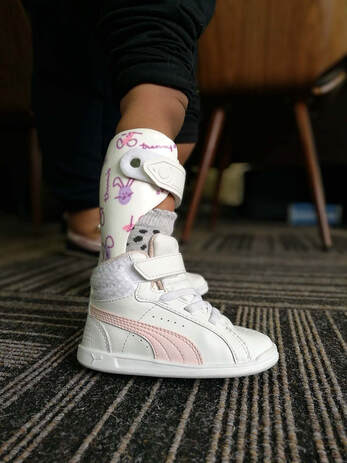
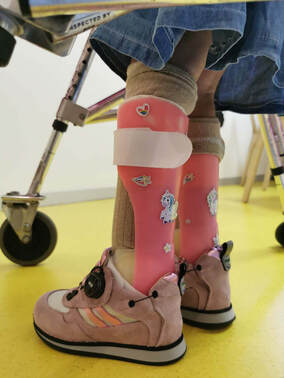
Gibson Orthotics uses a footwear fine-tuning approach that designs the orthosis around the patient's existing footwear where possible, rather than restricting them to a single specialised shoe. We assess the footwear at the fitting appointment and make precise adjustments to ensure the orthosis functions correctly within a wider range of shoe options. This gives patients greater choice, reduces the long-term cost of replacement footwear, and improves compliance, particularly in children who may resist wearing a device that limits their clothing or shoe options. |
Frequently Asked Questions:
|
Do I need a referral letter to book an appointment?
No referral is required. You can book directly via the online booking system or by calling the practice. If you have been referred by a clinician, please bring their referral letter to your first appointment as it provides useful clinical context. For medical aid pre-authorisation, a referring letter is typically required by your scheme. How long does the first appointment take? Initial consultations typically take 45 to 90 minutes, depending on case complexity. For paediatric neurological assessments or scoliosis evaluations, allow up to 90 minutes. Please bring any existing X-rays, clinical reports, or previous orthotic documentation to your first appointment. What should I bring to my appointment? Bring any existing imaging (X-rays, MRI scans), previous orthotic or prosthetic reports, a referral letter if you have one, and your medical aid details. For children, bring their usual footwear and any current orthoses. For gait assessment, wear or bring shorts or loose-fitting trousers that allow observation of the legs and knees. Can Gibson Orthotics communicate with my treating team? Yes. We actively welcome MDT communication with physiotherapists, occupational therapists, paediatricians, neurologists, and orthopaedic surgeons. With your consent, we will copy your referring clinician on assessment findings and outcome reports, and are available for clinical discussion by phone or email. What if my orthosis needs adjustment after fitting? Adult patients receive a free 3-month review. During this period, any adjustments that are not the result of normal wear and tear are addressed at no additional charge. Paediatric patients are reviewed on a schedule appropriate to their growth rate and device type. Contact us if you have concerns at any point — we would rather see you early than have you struggle with an ill-fitting device. |